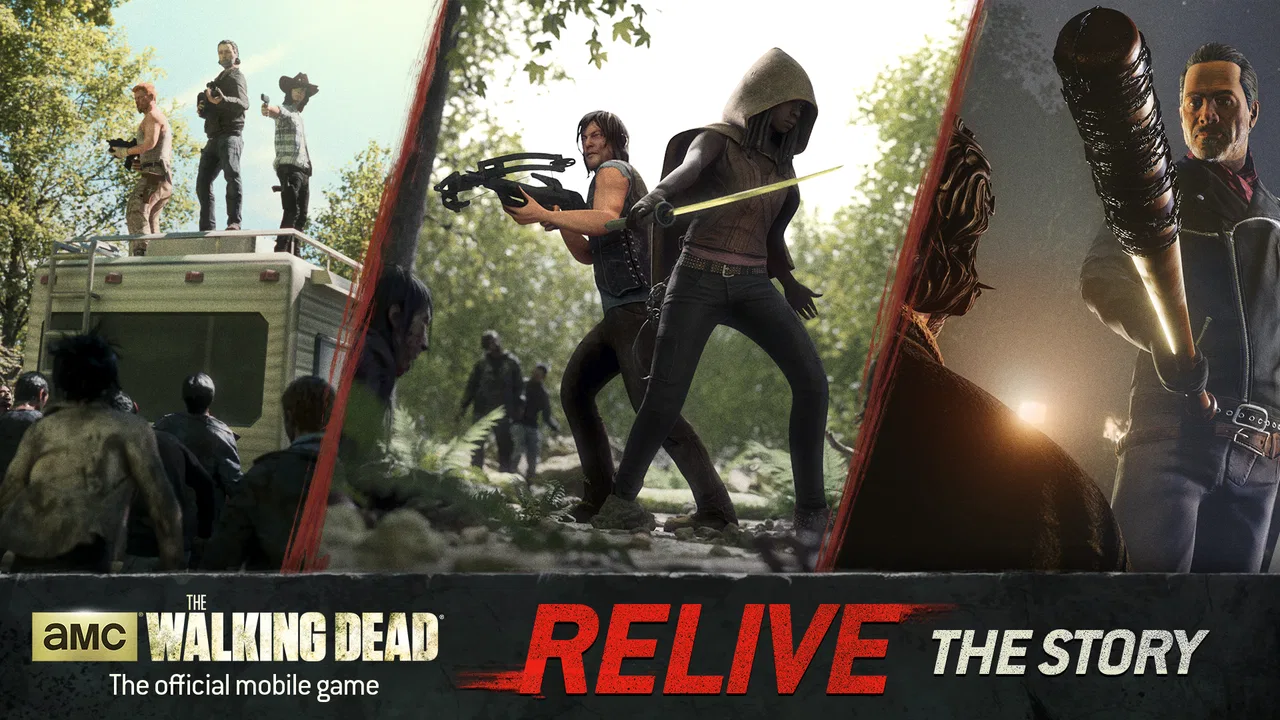
The Walking Dead No Man's Land
- 4.5
- Rating
- 10.00M
- Installs
- Free
- Price

 Analysis by App-foxy
I went into The Walking Dead No Man’s Land expecting a familiar licensed zombie game, but its appeal became clearer after a few sessions: it turns survival into a series of small tactical decisions rather than one long action sequence. You move survivors through dangerous locations, choose when to fight, and try to get everyone out in good enough shape to continue. The tension comes less from constant speed and more from deciding whether one more move is worth the risk.
That makes this a particularly approachable turn-based strategy RPG. It is free to start, carries a Mature 17+ rating, and comes from Deca Games. The game has been available since October 9, 2015, so it is not a new experiment trying to find its identity. It has had plenty of time to settle into a recognizable routine, and that routine is exactly what will decide whether you enjoy it.
How a typical session actually feels
I find a typical session works best when I treat each turn as a small planning exercise, not a race to clear the screen. I look for the choice that keeps the team flexible, then use the result to decide whether to press on or pause. That rhythm is especially useful when I’m playing in short breaks, and it helps explain where newcomers can get stuck.
You May Also Like

 AccuWeather: Weather Radar
AccuWeather Review: A Quick, Clear Forecast for Everyday Decisions
For everyday plans, the best forecast is the one you can understand quickly. AccuWeather makes rain timing, radar, and local conditions easy to act on, with a few trade-offs.

 Hill Climb Racing
Why Hill Climb Racing Still Turns Crashes Into One More Run
A tiny car, a bumpy hill and one more upgrade: Hill Climb Racing keeps resurfacing because its simple chaos makes every near-miss feel personal.

 AliExpress - Shopping App
AliExpress Makes Global Shopping Feel Personal, but Shoppers Bear the Risk
AliExpress turns a global marketplace into a pocket-sized discovery engine. Its reach is useful, its shopping loop compelling, and its trade-offs easy to miss.

 Lords Mobile: Kingdom Wars
Lords Mobile Is a Kingdom-Building Routine, Not a Quick Match
A case-by-case verdict on the building, battles, device demands, and social commitments that make Lords Mobile rewarding for some players and exhausting for others.

 PDF Scanner app - TapScanner
TapScanner Makes Paperwork Easier to Capture, Check, and Share
TapScanner makes scanning with a phone feel less like a rescue operation and more like a dependable step in getting work done. Its capture tools are useful, though not flawless.

 Block Blast!
 Shows How Much a Puzzle Game Can Leave Out
A quiet grid game shows why puzzle players increasingly value instant clarity, repeatable skill and low-pressure play—and where the genre still needs to catch up.
More From Our News Desk
View All News


The first action is about positioning, not button mashing
The first thing I noticed is that the game asks me to think before I attack. Each turn gives me room to consider movement, cover, enemy reach, and the condition of the survivors I am controlling. A careless advance can leave one character exposed, while a slower route may preserve health and useful abilities for the next encounter.
That opening decision gives the game a different feel from real-time zombie games. I am not trying to aim quickly or outrun a crowd with frantic swipes. Instead, I am reading the situation and choosing which problem deserves attention first. A nearby enemy may be easy to remove, but a more distant threat can become dangerous if ignored for too long.
The familiar Walking Dead setting helps the choices feel grounded. Survivors are not simply disposable pieces on a board; the presentation encourages me to think about keeping the group together and using each member for a particular purpose. I found myself planning around who should take the safer route, who could handle a dangerous target, and who needed protection rather than another fight.
One useful habit is to treat movement as a resource instead of assuming every turn should end with an attack. Advancing too far can trigger trouble before the team is ready, while spending a turn to improve the group’s position can make the following exchange much cleaner. This is one of the game’s less obvious strengths: patience often produces a better result than aggressive play.
The feedback rhythm keeps each encounter readable
After an action, the game gives me an immediate sense of whether the decision worked. An enemy is removed, a survivor takes damage, access to a route changes, or the team gains a safer position. That direct feedback makes the turn-based format easy to understand even when a mission contains several moving parts.
The rhythm is usually simple: inspect the area, act, see the consequence, then prepare for the next threat. I like that the game does not require me to memorize a complicated sequence before I can enjoy it. The deeper decisions appear gradually through the relationship between movement, attack range, survivor roles, and the cost of taking damage.
There is also a satisfying difference between a clean turn and a desperate turn. When I can eliminate a threat without exposing anyone, the game feels controlled. When I have to choose between finishing an enemy and retreating to safety, the tension becomes more interesting. The best moments are not necessarily the biggest battles; they are the turns where a small adjustment prevents a much larger problem.
That feedback rhythm is helpful for people who enjoy strategy but do not want a game that feels like a spreadsheet. The interface and turn structure make the consequences visible. At the same time, players looking for constant spectacle may find the pace restrained. The game’s excitement comes from accumulated decisions, not from nonstop movement.
Progression gives the action a reason to matter
Winning an encounter is only part of the reward. The larger motivation is improving the group so that future missions become manageable rather than overwhelming. Progress gives successful decisions a longer shadow: surviving a difficult situation can make the next attempt feel more achievable.
I particularly like the way this encourages me to think beyond the current fight. A character who is useful in one situation may not solve every problem, and the value of a team depends on how well its members complement one another. That makes preparation meaningful. I am not simply looking for the strongest individual option; I am considering what the whole group can handle.
The reward loop also creates a practical reason to replay or revisit the game. A failed mission is not only a loss; it can show me which weakness needs attention. Perhaps I moved too quickly, relied on one survivor too heavily, or accepted damage that was not necessary. The next attempt then has a clear purpose instead of feeling like a random retry.
Players should, however, understand the difference between free access and a completely frictionless experience. The game is free, but it includes optional in-app purchases ranging from $0.99 to $99.99 per item. I did not view spending as essential to understanding the strategy, yet the presence of purchases can affect how comfortable the progression feels for someone who dislikes monetized mobile games.
My advice is to decide early what kind of player you are. If you are happy to play patiently and accept that progress may take time, the free entry point is useful. If you tend to spend whenever a difficult stretch appears, set a personal limit before beginning. That simple boundary prevents the reward loop from turning into pressure.
Why another session begins after the mission ends
The reset between missions is important. Once an encounter is over, I am no longer reacting to the immediate threat. I am looking at the condition of the team, considering what went wrong, and deciding whether I am ready to move forward or should improve my approach first. That pause gives the game its long-term structure.
A good session often ends with a small unresolved question: can I handle the next mission with the current group, or do I need to change how I play? Because the answer is usually understandable, starting another session feels purposeful. I am not returning only because the game flashes a reward; I want to test a revised plan.
This makes the game suitable for short visits as well as longer stretches, although the experience is more satisfying when I have enough attention to think through each turn. It is not the best choice for playing while distracted. If I rush through the opening decisions, the later consequences can feel unfair even when they were caused by my own positioning.
A realistic everyday use case is a quiet break when I want something more engaging than a quick arcade round but less demanding than a large console-style adventure. I can complete a focused piece of strategy, put the phone away, and return later with a clear idea of what I want to try. The catch is that the game’s tension can make “one more mission” last longer than planned, especially after a near-success.
What makes the strategy more than a zombie theme
The license gives the game an emotional frame, but the tactical structure has to carry the experience. In my view, it succeeds when I am managing risk rather than merely clearing enemies. The question is rarely just whether I can win a fight. It is whether I can win without damaging the group so badly that the next challenge becomes unnecessarily difficult.
That trade-off makes retreat, restraint, and route selection meaningful. Even when the game presents an obvious target, I may prefer to secure space first. I also learned not to judge a survivor’s usefulness by one impressive action. A character’s real value appears across several turns, especially when the group needs a safe option rather than another attack.
One advanced habit is to plan the end of a turn before taking the first action. I ask where each survivor will finish, what can reach that position, and whether the team will still have a safe response if the next move goes badly. This sounds basic, but it prevents many avoidable mistakes. It also makes the game feel more deliberate than its zombie premise might suggest.
Another useful approach is to separate “necessary damage” from “convenient damage.” If an enemy can be ignored while the team reaches a better position, attacking immediately may create more danger than it removes. That distinction is easy to miss when the screen presents a tempting target, and learning it improved my results more than simply trying to play faster.
I also recommend treating a failed attempt as information. Instead of repeating the same route, identify the first decision that created the later crisis. Was the group split? Did one survivor absorb damage that another could have avoided? Did I spend a useful action on an enemy that was not yet urgent? These questions turn repetition into practice.
How it compares with other mobile strategy choices
Compared with real-time zombie action games, this one is calmer and more analytical. You lose some immediacy, but you gain time to inspect the battlefield and make a considered choice. If you want rapid aiming, constant movement, or the physical thrill of escaping a horde, another style of game will suit you better.
Compared with broad base-building strategy games, the focus here feels more personal. The important decisions are tied to a small group moving through dangerous situations, not only to expanding a large abstract empire. That makes the consequences easier to understand, though players who enjoy elaborate construction systems may find the tactical missions more appealing than the wider management layer.
It also differs from casual match-based games because success is not based on a single burst of concentration. The game rewards remembering what happened previously and adjusting the next attempt. That persistence is a strength for patient players, but it can feel slow if you want every session to be self-contained.
The Walking Dead setting may be a deciding factor as well. Fans who enjoy the tone of survival drama will probably get more from the characters and atmosphere than players who see the license as decoration. The Mature 17+ rating is a useful signal that this is not designed as a light, family-friendly cartoon experience.
Practical details before installing
The game is available at no upfront cost, which makes it easy to test without committing money immediately. It has an average rating of 4.5 from around 856 thousand ratings, and it has passed 10 million installs. Those figures suggest a large, established audience, but they should not replace personal judgment about the turn-based pace and purchase model.
On my device, I would check compatibility before planning a long-term playthrough. The listed minimum operating system is Android 7.0, and the current version is 7.22.0.247. The developer is Deca Games. These details matter most if you are using an older phone or deciding whether an existing installation needs updating.
The game is a good fit for someone who enjoys careful positioning, gradual team development, and a repeatable survival routine. It is less suitable for a player who wants immediate action, dislikes waiting through progression, or becomes frustrated when a mistake carries consequences into the next stage. It is also worth skipping if optional purchases are a major annoyance rather than a feature you can simply ignore.
For new players, I would begin by learning the cost of overextending. Do not measure a successful turn only by how many enemies disappear. Measure it by whether the group ends the turn in a position that gives you several reasonable choices next time. That mindset makes the early game clearer and remains useful when encounters become less forgiving.
My verdict on the complete action loop
My experience with The Walking Dead No Man’s Land comes down to a dependable sequence: take a careful action, read the immediate consequence, earn progress, reassess the team, and begin again with a better plan. The loop works because every stage feeds the next one. Combat creates feedback, feedback improves decisions, rewards support progression, and the reset gives the following session a reason to exist.
The game is not flawless. Its turn-based pace will not satisfy everyone, and the free-to-play structure requires self-control from players who are sensitive to optional purchases. Some sessions can also feel more like preparation than dramatic survival, especially when I am trying to correct a mistake rather than discover something new.
Still, I think it earns a recommendation for fans of tactical mobile games and The Walking Dead’s survival atmosphere. I would suggest it to a friend who enjoys planning a route, protecting a small team, and learning from a failed attempt. I would not recommend it to someone looking for a fast action game or a completely pressure-free progression system.
The strongest reason to keep playing is not simply defeating zombies; it is seeing a risky situation become manageable because you made one smarter decision than last time. That is a modest promise, but this game delivers it often enough to make another session feel worthwhile.
FAQs for The Walking Dead No Man's Land
01What is The Walking Dead: No Man’s Land?
The Walking Dead: No Man’s Land is a turn-based tactical role-playing game inspired by AMC’s The Walking Dead television series. You build a team of survivors, explore dangerous locations, fight walkers and hostile humans, and make decisions that affect your progress. The game combines mission-based combat, character development, resource management, and story content featuring familiar characters and locations from the series.
02Is The Walking Dead: No Man’s Land free to download and play?
Yes, The Walking Dead: No Man’s Land can be downloaded and played for free on supported Android and iOS devices. However, it includes optional in-app purchases for items such as supplies, upgrade materials, character resources, and other conveniences. Progress is possible without spending money, although free players may need more patience because energy limits, timers, and resource requirements can slow advancement.
03Does the game require an internet connection?
An internet connection is generally required for most features in The Walking Dead: No Man’s Land. Online access is used for account synchronization, events, updates, advertisements, purchases, guild activities, and other connected content. Some previously loaded elements may appear accessible temporarily without a connection, but the game should not be considered a fully offline experience, especially if you want to save progress reliably.
04How does combat work in The Walking Dead: No Man’s Land?
Combat uses turn-based movement and action points, so every step and attack should be planned carefully. Survivors have different classes, strengths, and abilities, while walkers can become especially dangerous when noise attracts additional enemies. Positioning, teamwork, weapon selection, and choosing when to retreat are important. Rushing into a mission can quickly leave your team injured or surrounded.
05Is The Walking Dead: No Man’s Land suitable for new players?
The game is approachable for newcomers, particularly if they enjoy tactical combat and The Walking Dead universe. Early missions introduce movement, attacks, character upgrades, and resource management gradually. Nevertheless, the number of currencies, upgrade systems, timers, events, and recurring challenges can feel complex at first. Players who prefer relaxed games without grinding or in-app purchase pressure may find the later progression demanding.
Pros
- Strong character roster featuring familiar survivors from the TV universe.
- Turn-based combat makes positioning and tactical planning feel rewarding.
- Regular events and challenges provide goals beyond the main story.
- Base upgrades add progression and useful resource-management decisions.
- Playable offline in many single-player situations.
Cons
- Energy limits can interrupt longer play sessions.
- Higher-tier upgrades require substantial grinding for resources.
- Some missions become difficult without carefully developed characters.
- Premium currency and bundles may pressure free-to-play players.
- Large updates can consume considerable storage space.

The Walking Dead No Man's Land
Gallery